
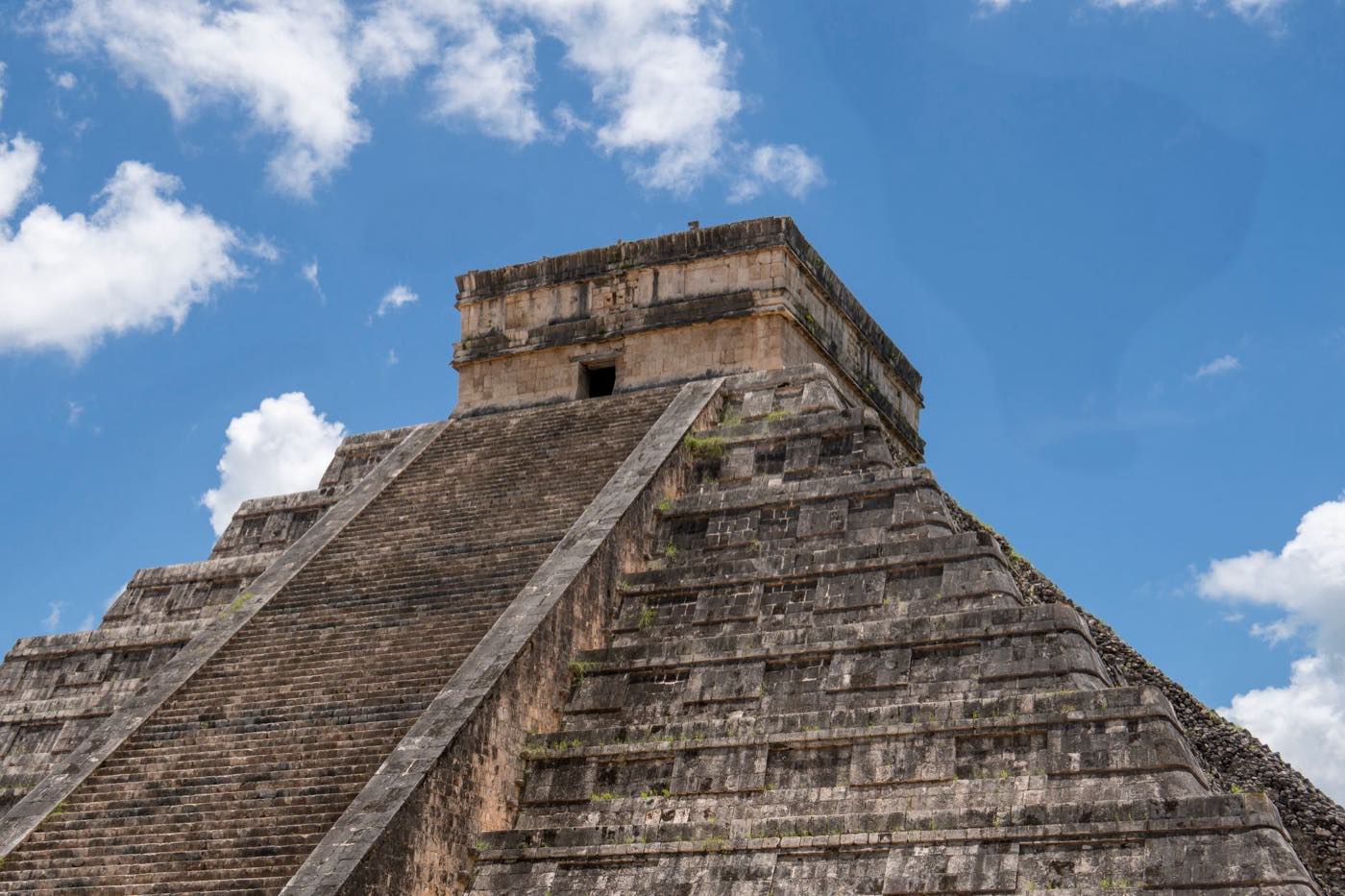

Chichén Itzá is the most visited archaeological site in Mexico, with 2,182,034 admissions in 2025, an average of 5,978 people a day. From Playa del Carmen, in Quintana Roo (nothing to do with the Playa del Carmen in Lanzarote), it is a full day out: 112 miles each way, 2 to 4 hours of travel depending on how you go, 697 pesos to get in if you are a foreign visitor, and afternoon heat that regularly passes 91°F on a site with almost no shade. Planned well, the visit fits into 4 hours and stays with you. Planned badly, it is the worst day of the trip. Here are the numbers that keep you out of the second category.
Chichén Itzá from Playa del Carmen: 112 miles and an hour lost on arrival
Chichén Itzá lies about 112 miles (180 km) west of Playa del Carmen, next to the village of Pisté, in the state of Yucatán. Budget 2 to 2.5 hours by car on the toll road, 3 to 4 hours on the ADO bus, and 11 to 12 hours door to door if you take an organized tour.
The detail nobody tells you before you leave: Yucatán and Quintana Roo are not in the same time zone. Playa del Carmen runs on UTC minus 5, Yucatán on UTC minus 6, and has done since February 2015. Your phone therefore jumps back an hour when you reach Pisté. The 8 am opening on site is 9 am on your Playa watch, and the 4 pm closing is 5 pm. That works in your favour in the morning: leave Playa at 7 am and you are at the ticket window around 8:15 am local time.
The drive is straightforward. Head west out of Playa on highway 305D, join the 180D at Nuevo Xcan, exit at Pisté. Two toll plazas on the way, Tintal and Pisté.
The three ways to get there, and what each one really costs
An organized tour gives the best price to hassle ratio: it folds the 697 pesos entrance fee into a single price and removes 4 to 5 hours of driving. A rental car only pays off from three people up.
- Organized tour: from about $80 per person. One local operator lists $75 per person, of which $40 covers entrance fees and taxes, with air conditioned transport, a certified guide, a Yucatecan buffet, a cenote swim and a stop in Valladolid. Hotel pickup runs between 7 am and 7:45 am. It is a long day, but you are not the one driving.
- Rental car: 600 to 1,000 pesos a day ($32 to $54), plus tolls. Toll calculators give 415 to 500 pesos each way for a car ($22 to $27), so 830 to 1,000 pesos round trip, split between the Tintal and Pisté plazas. Add 124 pesos for parking on site ($6.70) and 697 pesos per adult to get in. With two people you pass the tour price quickly; with four you save.
- ADO bus: one morning departure, around 8:10 am, from the ADO Alterna terminal on 20th Avenue North, near Calle 12. Roughly 450 pesos round trip ($24) at 2026 fares, 3 to 4 hours each way, with the return from Pisté around 4:30 pm. The cheapest option, and the one that lands you at the site at the worst hour of the day.
| Option | Cost per person | Door to door | Arrival on site | Who it suits |
|---|---|---|---|---|
| Organized tour | from $80, entry included | 11 to 12 h | 9:30 to 10:30 am | Travellers without a car, families |
| Rental car | 600 to 1,000 pesos a day + 830 to 1,000 pesos tolls + 697 pesos entry | 9 to 10 h | 8 am if you leave Playa at 7 | Groups of 3 to 5 splitting costs |
| ADO bus | about 450 pesos round trip + 697 pesos entry | 10 to 11 h | 11:30 am to noon | Solo travellers on a budget |
Dollar figures throughout this guide use about 17 pesos to 1 US dollar, September 2026.
The 2026 entrance fee: 697 pesos, and why it comes in two parts
Admission to Chichén Itzá costs 697 pesos for a foreign adult in 2026, about $38. That figure adds two separate charges: the federal INAH fee of 105 pesos ($5.70), which is the same for everyone, and the Yucatán state fee of 592 pesos ($35), which is where the price difference between visitors comes from.
The other rates:
- Mexicans and foreign residents of Mexico: 310 pesos ($18), on presentation of Mexican ID. They also enter free on Sundays, which is precisely why Sunday is the busiest day of the week.
- Yucatán residents: free for the whole of calendar year 2026, under state decree 144/2025.
- Children under 13: free. Visitors over 60, teachers and people with disabilities are also exempt with proof.
- Non professional video camera permit: 63 pesos ($3.40).
- Parking: 124 pesos for a car ($6.70), 199 pesos for a coach ($11).
- Noches de Kukulkán evening show: 708 pesos Wednesday to Saturday ($38) and 450 pesos on Sundays ($24). It is a separate session from the daytime visit, and you have to leave the site at closing and queue again at the evening box office, which opens at 3 pm.
Good news since 27 April 2026: both parts are now collected together as a boleto único, a single ticket. No more two consecutive queues at the gate. Bring cash in pesos anyway. The card terminals go down regularly and there is no ATM inside.
What time to arrive: the one decision that changes your day
Arrive at opening, 8 am Yucatán time, and not a minute later. It is the only choice in this visit that genuinely matters.
Three reasons you can check for yourself. Crowds: with close to 6,000 visitors a day on average, the plaza in front of El Castillo is clear between 8 and 9:30 am, then fills as the coaches from Cancún pull in between 10 and 11 am. Heat: the site is inland, away from the sea breeze, with almost no shade, and afternoon averages sit around 90 to 91°F (32 to 33°C) in March and April, higher in May. Light, finally: the limestone reads white and flat at midday and sculpted in early morning.
The official INAH hours are 8 am to 4 pm daily, with last admission at 3 pm. That is the number to plan around. Plenty of tour operators and guidebooks still print a 5 pm close, a leftover from the pre 2020 schedule, so do not build your afternoon on it. The morning ADO bus, which drops you around 11:30 am, therefore hits the worst possible slot and leaves you a short window: that, far more than its price, is its real weakness.
One honest note: the site closed for almost two weeks from 19 May 2026, after a dispute between INAH and the artisans working on the grounds, with thousands of visitors turned away at the gates before an agreement reopened it on 1 June. Episodes like that are rare, but check the news the night before if you are driving 112 miles to see it.
How long to stay
Two hours covers the main monuments, three sees them without rushing, four with a guide and a break. Past that, the heat wins. The circuit is flat, on gravel and grass paths, and adds up to 1.2 to 2 miles of walking. Bring 1.5 litres of water per person (about 50 fl oz), a hat and closed shoes. The day that works: through the gate at 8 am, visit until 11, cenote Ik Kil, lunch in Pisté, back in Playa before 6 pm Playa time.
What you actually see on the site
Chichén Itzá is not a single pyramid but a sprawling Maya Toltec city, and four groups of buildings hold most of the interest.
- El Castillo, the pyramid of Kukulcán. Nine terraces and four stairways of 91 steps which, with the platform on top, total 365, the days of the solar year. You see it the moment you reach the main plaza.
- The Great Ball Court. The largest ball court known anywhere in Mesoamerica, with carved walls showing a decapitation scene. Stand at one end and speak: the echo carries wall to wall.
- The Sacred Cenote. A natural well 200 ft across, linked to the site by a causeway 1,000 ft long, from which dredging brought up jade, gold and human bone. You do not swim here. It is a ritual site, not a pool.
- El Caracol, the observatory. A round tower with slits aligned on the extreme positions of Venus, and oddly one of the quietest corners of the whole site.
Add the Temple of the Warriors and its thousand columns, a short walk from El Castillo.
No, you cannot climb the pyramid any more
Climbing El Castillo has been banned since 2006, after a fatal fall and the erosion caused by visitor traffic on the steps. The ban covers every structure on the site and it is enforced: offenders face heavy federal fines and removal by site staff.
That changes what you should come for. If what you actually want is to climb a Maya pyramid in the jungle, go to Cobá instead: the Nohoch Mul pyramid reopened to climbers on 7 December 2025 after six years closed, by way of a wooden staircase laid over the 120 original steps, in limited groups.
The equinox shadow serpent: worth seeing, or worth avoiding
Twice a year, at the equinoxes, late afternoon sun throws a line of seven lit triangles onto the balustrade of the north stairway, giving the illusion of a serpent sliding down the pyramid. The effect runs between 3 and 4:30 pm and lasts around 45 minutes. The next dates are the autumn equinox on 22 September 2026 and the spring equinox on 21 March 2027. INAH runs a special operation on those days, with extended hours so the plaza is not cleared before the shadow forms.
Our position is blunt: if you dislike crowds, these are precisely the two days to avoid. The 2026 spring equinox drew more than 15,000 people in a single day, against 12,000 in 2025 and 14,727 in 2024, the year the authorized visitor ceiling was reached. You will see a shadow, over several thousand heads, at the hottest hour of the afternoon. The effect does show up more quietly on the days either side of each equinox, but note that on an ordinary day the site clears at 4 pm, so you catch the beginning of it rather than the full sequence. Coming on 18 or 24 March gives you most of the phenomenon with normal crowds.
The vendors along the paths: what to expect
On the paths between the monuments you will pass dozens of stalls selling masks, textiles and clay whistles, and vendors calling out in English, Spanish and French. The official count carried out in 2025 recorded 662 artisans working on the site; their representatives put the number of people present in the area above 2,000.
This is the single most common complaint from visitors: the visual and acoustic saturation, with the jaguar call whistle going off every twenty seconds. What works is a smiling "no, gracias" without breaking stride. Second reason to arrive at 8 am: a good share of the stalls is not set up yet.
An official guide: 900 to 1,800 pesos, and when it earns its keep
Certified guides wait at the site entrance and charge 900 to 1,800 pesos ($53 to $106) for a group of up to 10 people, in English, Spanish, French, German or Italian. The tour lasts 1.5 to 2 hours.
Our view: hire one and split the bill. At 10 people that is under $10 each, and the site is very poorly documented if you walk it alone. Interpretive panels are rare and terse, and without commentary the Great Ball Court is an empty field. Check that your guide wears the official badge and agree the price before you set off.
Cenote Ik Kil, 2 miles from the site
Ik Kil is the cenote nearly every tour tacks on after the ruins, and it holds up provided you get there before 11 am: an open well 200 ft across and 130 ft deep, curtains of roots falling from the rim, and water at 75 to 79°F (24 to 26°C) all year.
- Distance: 2 miles (3 km) from Chichén Itzá, on the Valladolid road.
- Hours: 9 am to 5 pm, daily.
- Price: 200 pesos for basic entry ($11), 240 pesos at some windows ($13), 150 pesos for ages 5 to 11 ($8), 440 pesos with the restaurant buffet ($24).
- Provided: mandatory life jacket, lockers, showers, changing rooms and free parking.
- The catch: between 11 am and 3 pm every coach from Chichén Itzá unloads here and the pool turns into a scrum. If you have a car, go at 9 am, or pick a different cenote on the way home from our guide to the cenotes around Playa del Carmen.
Chichén Itzá, Tulum or Cobá: which one if you only have a day
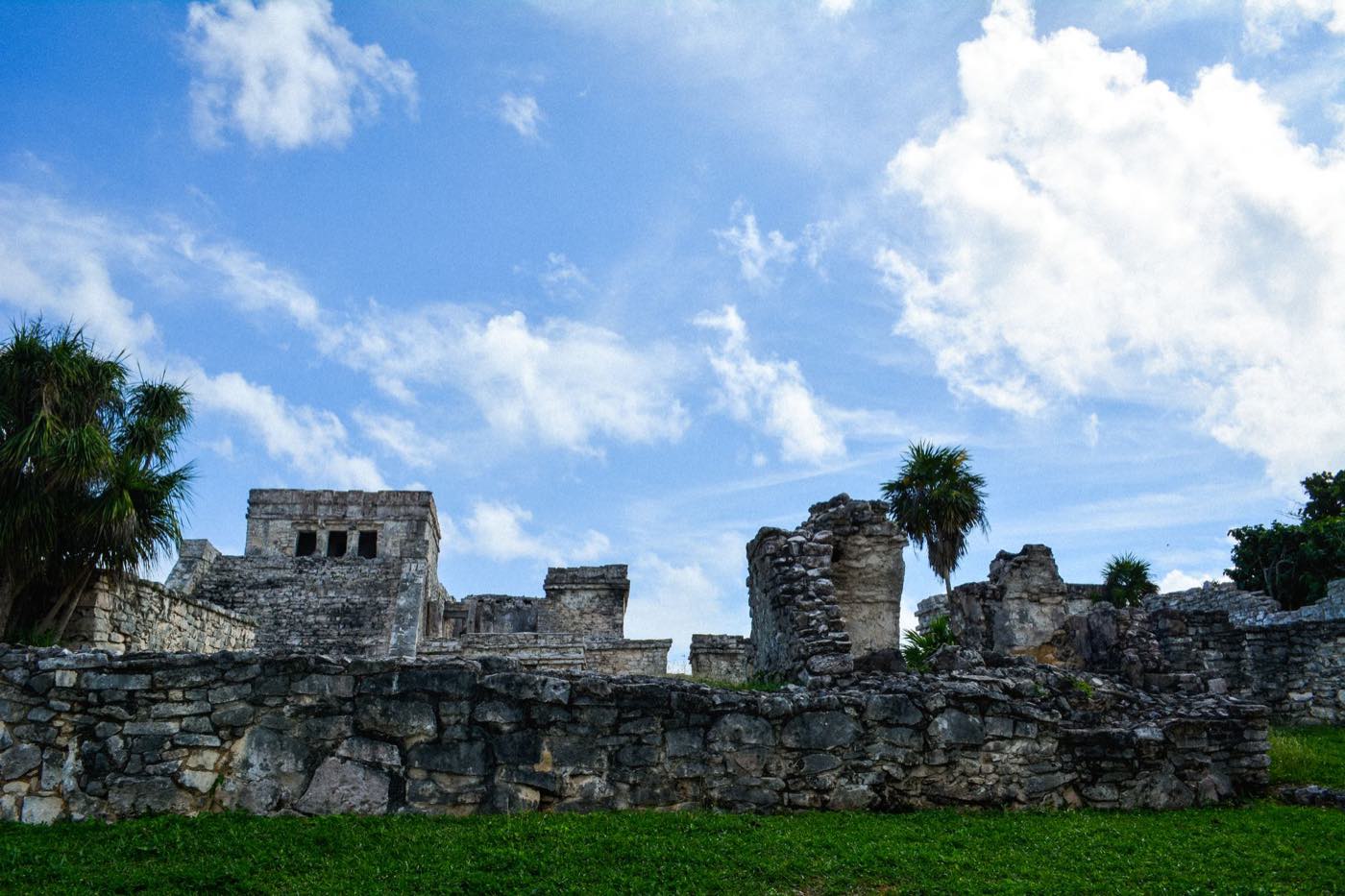
If you have one day for a Maya site from Playa del Carmen, choose Tulum. The reasoning is arithmetic: 40 miles instead of 112, 45 minutes instead of 2.5 hours, 265 pesos instead of 697 since the July 2026 reduction, and half a day freed up for the beach.
| Site | Distance from Playa | Drive | 2026 foreign rate | Visit length | Climbing allowed | Strong point |
|---|---|---|---|---|---|---|
| Chichén Itzá | 112 miles | 2 to 2.5 h | 697 pesos ($41) | 2 to 3 h | No, banned since 2006 | The most imposing Maya site in the country |
| Tulum | 40 miles | 45 min to 1 h | 265 pesos ($16) since July 2026 | 1.5 to 2 h | No | Ruins on a cliff above the sea |
| Cobá | 68 miles | 1.5 to 1.75 h | 330 pesos ($19), including a 120 peso community fee | 2 to 3 h | Yes, Nohoch Mul since December 2025 | Jungle, bikes, a 138 ft pyramid |
How to decide:
- One day and you came for the sea: Tulum. The site takes 1.5 hours and you are on the sand by noon.
- One day and you came for the monument: Chichén Itzá. No other site on the peninsula has the scale of that main plaza, and that is the only argument that justifies 5 hours in a vehicle.
- You want to climb and dodge the groups: Cobá. Half the entrance fee, 120 steps to go up, bikes to rent for 80 to 100 pesos ($5 to $6), and nothing like the 5,978 daily visitors of Chichén Itzá.
- You have two days: Tulum one morning, Chichén Itzá another. Do not chain them in one day. The combination stacks 5 hours of road and about 960 pesos of entrance fees ($52) into a single outing.
The rest of the programme sits in our guide to things to do in Playa del Carmen, and the most bearable season for the Yucatán interior is covered in the best time to visit Playa del Carmen.
Keep going

Frequently asked questions
How much does it cost to enter Chichén Itzá in 2026?
697 pesos for a foreign adult, about $38. That total adds two charges: 105 pesos for INAH, the federal institute, and 592 pesos for the state of Yucatán. Since 27 April 2026 both are paid together as a single ticket. Mexicans and residents pay 310 pesos ($18) and enter free on Sundays, Yucatán residents enter free all through 2026, and under 13s are free. Add 124 pesos for parking, and bring cash in pesos because the card terminals are unreliable.
How long does it take to get from Playa del Carmen to Chichén Itzá?
2 to 2.5 hours by car for 112 miles on the 305D then 180D toll roads, with 415 to 500 pesos of tolls each way ($22 to $27). The ADO bus takes 3 to 4 hours, leaving the Alterna terminal around 8:10 am and returning from Pisté around 4:30 pm. An organized tour runs 11 to 12 hours door to door, with hotel pickup between 7 and 7:45 am.
What time should I arrive at Chichén Itzá to avoid the crowds?
8 am local time, which is opening. The site takes close to 6,000 visitors a day and the first coaches from Cancún arrive between 10 and 11 am. Mind the time zone: Yucatán is UTC minus 6 and Playa del Carmen UTC minus 5, so 8 am on site is 9 am on your Playa watch. Leave Playa around 7 am. Official INAH hours are 8 am to 4 pm, with last admission at 3 pm, even though many operators still advertise a 5 pm close.
Can you climb the pyramid at Chichén Itzá?
No. Climbing El Castillo, and every other structure on the site, has been banned since 2006 after a fatal fall and documented erosion damage. The ban is enforced and carries heavy federal fines. If you want to climb a Maya pyramid, go to Cobá: the Nohoch Mul pyramid reopened to climbers on 7 December 2025, by a wooden staircase and in limited groups.
Should I visit Chichén Itzá on the equinox?
Only if crowds do not bother you. The shadow serpent forms between 3 and 4:30 pm on equinox days, the next being 22 September 2026 and 21 March 2027, and lasts around 45 minutes. But the 2026 spring equinox gathered more than 15,000 people in one day, against 12,000 in 2025. Coming three or four days before or after gives a very similar effect with ordinary crowds.
Read next
 Things to doThings to Do in Playa del Carmen: 12 Activities Ranked by Price, With What Is Worth It and What You Can Skip
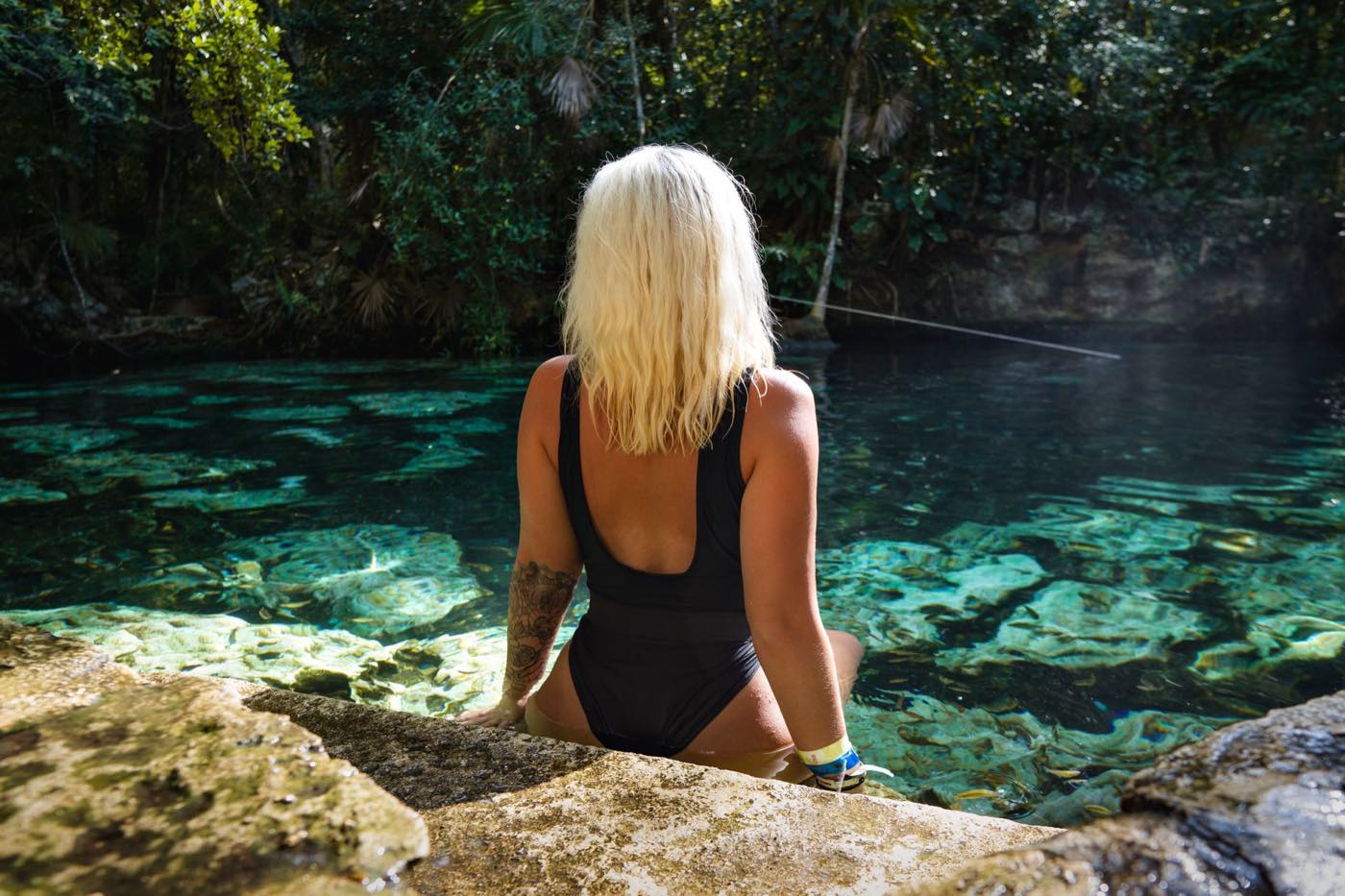 Things to doCenotes Near Playa del Carmen: The 7 Best, With Prices, Hours and How to Get There
 Plan your tripThe Best Time to Visit Playa del Carmen: Month by Month, Season by Season