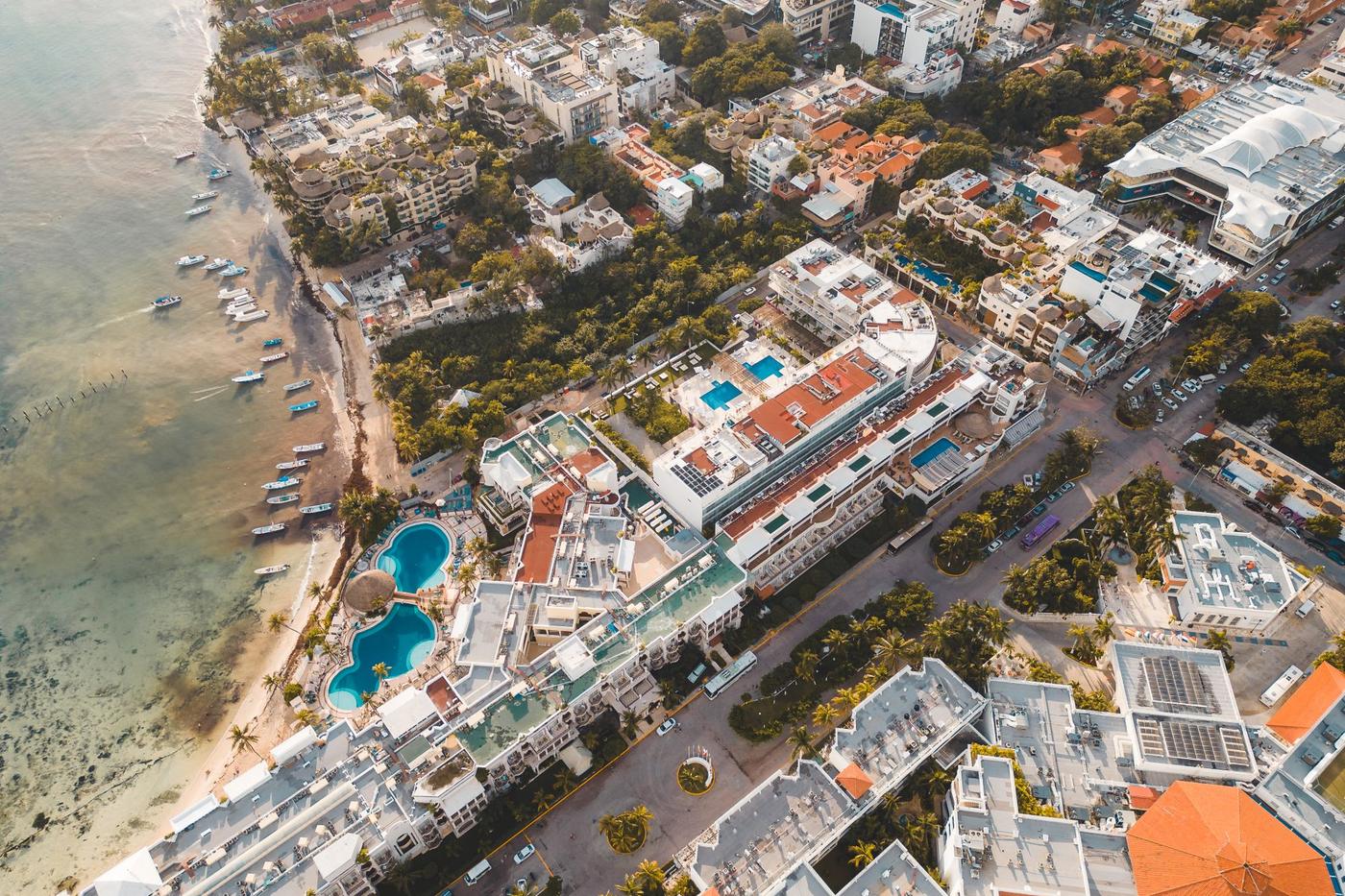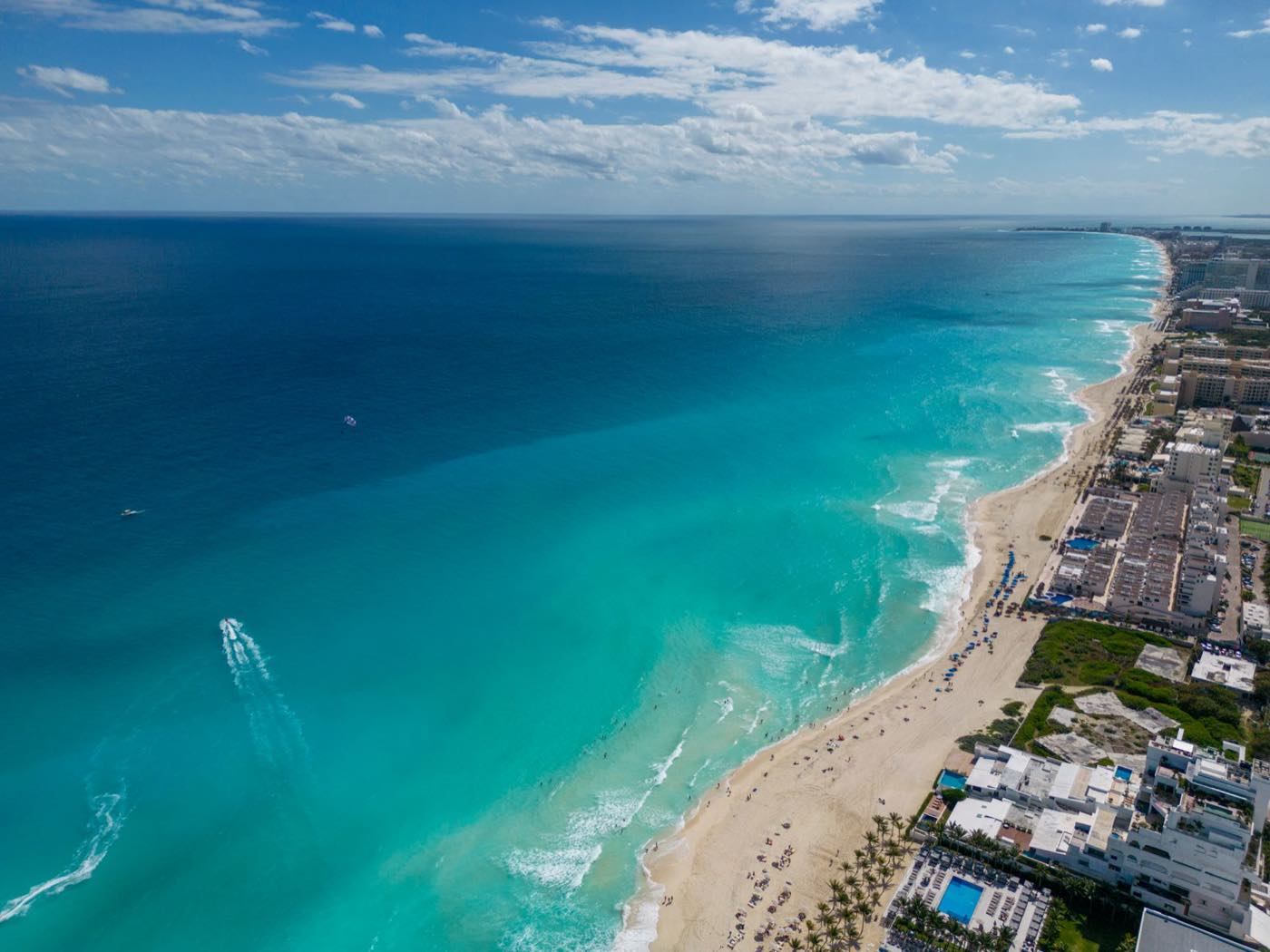

Getting into Mexico for a week in Playa del Carmen, in the state of Quintana Roo, is still simple: US, Canadian, British and Australian citizens need no visa for a tourist trip. But two things have changed and catch people out at the border. The little paper form the flight attendants used to hand out, the FMM tourist card, has disappeared from airports. And the 180 day stay is no longer granted automatically: an immigration officer writes the number of days by hand, sometimes 30, sometimes 60. Here is what to prepare, what to check at the counter before you walk away, and what it all costs. Peso amounts are converted at about 17 pesos to the dollar, the September 2026 rate.
Mexico entry requirements at a glance
For a tourist trip to Playa del Carmen you need a passport valid for the whole of your stay, a ticket out of the country, an address where you are staying, and the Quintana Roo tourist tax. Nothing else.
| Requirement | Mandatory | Cost | When to deal with it |
|---|---|---|---|
| Passport book valid for the whole stay | Yes | $165 for a first US adult book, $130 to renew | 6 to 8 weeks routine |
| Tourist visa | No for the US, Canada, the UK and Australia | $0 | Nothing to do |
| Paper FMM tourist card | No, gone for air arrivals | $0 | Nothing to do |
| Onward or return ticket | Yes, you must be able to show it | Included in your fare | Before boarding |
| Visitax, Quintana Roo state | Yes | about 283 pesos, roughly $15 | Before your departure flight, online |
| Municipal sanitation tax | Yes | about 35 pesos a night, roughly $1.90 | Collected by the hotel |
| Non-resident fee, the DNR | Yes | 983 pesos, about $53, already in your airfare | Nothing to do if you fly |
Two names worth keeping apart. The FMM, Forma Migratoria Múltiple, is the Mexican tourist card: it is what proves your stay is legal. The Visitax is a Quintana Roo state tax, purely fiscal, and it grants you no right to enter anything.
Everything below was checked on the update date of this guide, September 13, 2026, against the official sources named in the text. Mexican immigration rules move fast, and we are a travel guide, not a consulate: before you fly, open the Mexico page written for your own nationality on travel.state.gov, travel.gc.ca, gov.uk or smartraveller.gov.au, plus the immigration institute at inm.gob.mx.
Your passport must cover the trip, not six months more
Your passport has to be valid for the expected duration of your stay, and that is the whole rule. The Government of Canada puts it in exactly those words in its Mexico advice, updated September 11, 2026, and the UK Foreign Office says the same: valid for the duration of your stay.
So Mexico is not one of the countries demanding six months of validity beyond your return date. That habit comes from other destinations. Our advice stays cautious anyway, because airlines apply their own margins at the gate: if your passport expires less than three months after you fly home, renew it. The gov.uk page goes further and relays the Mexican Embassy's own recommendation, at least 180 days of validity, on the logic that 180 days is the longest a tourist can stay.
For Americans, the format matters as much as the date. You need a passport book to fly. The passport card, which works at land borders and on cruises, is not accepted for international air travel, and a REAL ID driver's license is not a travel document once you leave the country. A first adult book costs $165, $130 application plus $35 execution, and a renewal by mail or online is $130. Routine processing runs 6 to 8 weeks, expedited 2 to 3 weeks for $60 more. Every traveler carries their own passport, newborns included.
No tourist visa for US, Canadian, British or Australian citizens
None of those four nationalities needs a visa to enter Mexico as a tourist, up to a maximum of 180 days. Canada states it plainly for Canadians, the UK Foreign Office for British nationals, and Australians are covered by the same visa waiver for tourism, business or transit.
One more route is worth knowing, because it saves people from other countries a consulate appointment: a valid visa for the United States, Canada, Japan, the United Kingdom or the Schengen area, or permanent residence in one of those, lets the holder enter Mexico without a Mexican visa whatever their nationality.
A strict rule follows from the tourist status. No paid work and no volunteer work during a tourist stay. Do not describe your trip as a relocation or a remote-work stint at the counter: that is exactly the answer that shortens the number of days you get written on the stamp.
What changed: the paper FMM is gone
The form the cabin crew used to hand out no longer exists for air arrivals. Mexico's immigration institute stopped issuing the physical FMM and replaced it with a digital one, the FMMd. The Canadian advice describes the same system: travelers arriving by air complete the digital form online on arrival, while land crossings still use the paper FMM.
At Cancún, which is where almost everyone bound for Playa del Carmen lands, that means four steps.
- You fill in nothing on the plane. Land borders still use a form, and British nationals crossing by land are told to complete it online on the INM site before arriving.
- You face an officer or an automated gate. E-gates are in service at several Mexican airports including Cancún, which does not rule out being asked questions.
- You leave with proof: an entry stamp with a number of days written by hand, or a printed slip showing the admission time, the last day of your authorized stay and a digital seal.
- You download your FMMd on inm.gob.mx, or by scanning the QR code posted at the immigration filters.
Our one instruction here: photograph the stamp or the slip before you even reach baggage claim, and download the FMMd the evening you arrive. Thermal paper fades in a few weeks in a beach bag, and this is the proof you will be asked for in a spot check and again on the day you leave.
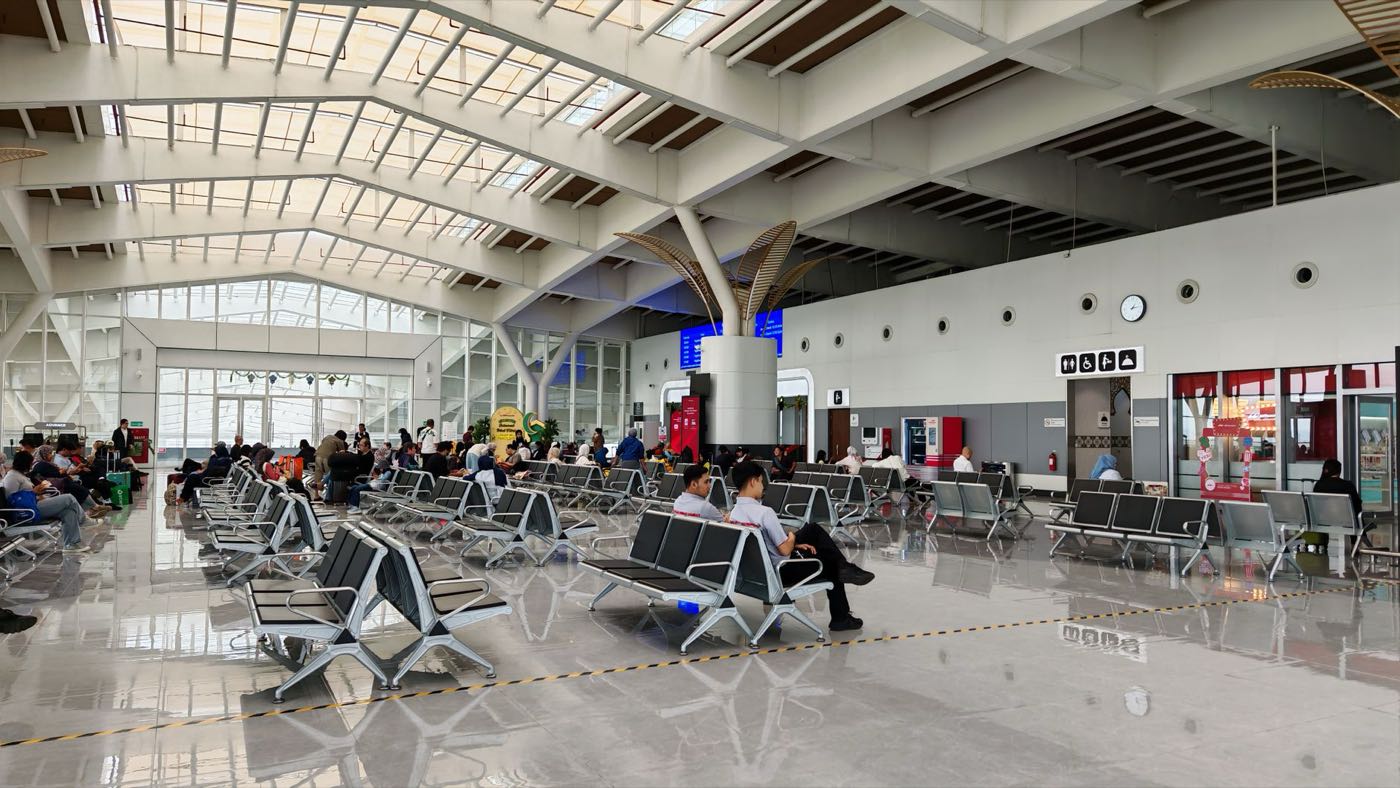
The days you get are written by hand: read them before you leave the counter
One hundred and eighty days is a ceiling, not a right. The Government of Canada spells it out in its September 11, 2026 update: the maximum is not granted automatically, and the immigration officer determines the exact length of your authorized stay. The UK advice describes the same thing from the other end, a stamp in your passport with the number of days you are allowed to stay.
In practice, travelers walk away from the desk with 30 or 60 days in ballpoint. For a two week beach holiday that changes nothing. It becomes a problem if you are chaining several countries together, or if you decide to extend once you are here.
The reflex takes ten seconds: read the number of days on the stamp before you step away from the counter. If it is shorter than your trip, say so immediately, calmly, return ticket in hand. Once you are past the immigration hall, fixing that number is close to impossible without leaving the country. The days are calendar days counted from the date of the stamp, and if you went through an automated gate the same information is on your slip as a last authorized date.
What the officer can ask to see
Three documents, reachable in thirty seconds.
- The return or onward ticket. It is the one most often asked for, and the one that justifies the number of days you are given.
- Where you are staying. The name and full address of the hotel or rental, not just the words Playa del Carmen.
- Means of support for the whole stay. A working credit card covers it in the overwhelming majority of cases. Mexican regulations set no minimum amount.
The interview is short. Answer the question asked and stop: tourism, ten days, a hotel in Playa del Carmen. Your plan to rent a car and drive out to the cenotes around Playa del Carmen is not immigration's business. For the leg after the airport, our guide to getting around Playa del Carmen has the ADO bus, the colectivos and the transfer prices: the airport sits 34 miles (55 km) north of town.
Visitax and the hotel tax: the two Quintana Roo charges
Visitax is compulsory for foreign visitors staying in the state of Quintana Roo, which covers Cancún, Playa del Carmen, Tulum, Cozumel and Bacalar. The UK Foreign Office confirms it as an entry tax for the state, payable online before or during your stay.
- Amount: about 283 pesos per person, roughly $15. The charge is set at 2.5 UMA, and the state has said it is not going up in 2026. Figures of 283 and 285 pesos both circulate depending on the source: only the amount displayed on the official portal when you pay is authoritative.
- Where to pay: visitax.gob.mx and nowhere else. Intermediary sites resell the same two minute form for $25 to $60 while looking like the official service. Type the address yourself.
- When: once per trip, before you leave the state. Do it from your hotel, not in the boarding queue.
- Proof: a QR code to download and keep. The portal lets you re-download it for at least a year after you leave.
This last point used to be theoretical. The tax has been legally mandatory since 2021 but went largely unchecked for years, and plenty of visitors never paid it. That changed in 2026. Travelers and local outlets report staffed checkpoints at Cancún airport in Terminals 3 and 4, positioned just before the escalators up to security, where officials in high-visibility vests ask departing foreign passengers to show the QR code. Without one you are pulled out of the line and told to pay on your phone, passport in hand, which is a bad way to spend the twenty minutes before a flight. Sources also disagree on whether young children are still exempt, so pay for everyone or check the portal itself.
The second tax you never hand over directly: the derecho de saneamiento ambiental, a municipal sanitation charge. In Playa del Carmen the Solidaridad council sets it at 30 percent of the UMA and the hotel collects it per room per night occupied. With the UMA at 117.31 pesos since February 1, 2026, that is about 35 pesos a night, under $2.
Finally, the non-resident fee, the DNR, is 983 pesos in 2026, about $53, and it is already inside the price of your plane ticket: nothing to pay on landing. It is only collected separately at land crossings. A further increase is in the 2027 budget package, so check your fare breakdown if you are booking far ahead.
Customs: a $500 allowance and a $10,000 cash threshold
Mexico's customs agency sets two numbers and they are the only ones you need. The duty-free allowance is $500 of goods per passenger arriving by air, on top of personal effects and on presentation of the receipt. Above that you pay a flat duty on the excess value at the customs desk. Allowances of family members traveling together, in the same vehicle or on the same flight, add up.
Your personal effects do not count against that allowance. Admitted per person: 2 cameras, 3 phones, 2 tablets, 2 laptops, your clothes, your sports equipment and your medication, which is enough to travel light for a trip built around the beaches of Playa del Carmen or a week of diving. For alcohol and tobacco, from age 18: 20 packs of cigarettes, 25 cigars, 3 liters of spirits and 6 liters of wine.
The cash declaration threshold is $10,000, or the equivalent in any other currency, counting notes, checks and bearer instruments together. It is per person, and failing to declare means a fine set as a percentage of the amount above the threshold, with criminal penalties above $30,000 undeclared. Declaring costs nothing and takes a minute.
Traveling with children
A minor traveling with both parents, or with one of them, needs nothing but their own valid passport. Mexico's departure form for minors, the formato SAM, does not apply to foreign children visiting as tourists: it covers Mexican minors and foreign minors who are temporary or permanent residents of Mexico.
Two situations call for a document on top of the passport.
- The child travels with neither parent, with grandparents for example. Mexican practice is that a non-Mexican under 18 leaving Mexico should carry written, notarized permission from each parent or guardian who is not traveling, naming the parent, the child and the accompanying adult. Get it notarized at home before you go.
- Your own country adds its own rule. The Government of Canada strongly recommends a consent letter for any Canadian child traveling without both parents, and airlines apply it as if it were law. Australia and the UK give similar advice.
The case people forget: one parent traveling alone with a child who does not share their surname. No text requires it, but slip a copy of the birth certificate into the carry-on. It settles in thirty seconds a question that can otherwise pin a family to the counter.
Driving in Mexico on your home license
Your national driving license is enough. Rental desks in Quintana Roo accept US, Canadian, British, Australian and European licenses as they are, so an International Driving Permit is not required for a tourist trip. If you have one, bring it: it smooths a roadside check, but it never replaces the national license, which has to be shown alongside it.
One financial point catches almost everyone. Auto insurance issued abroad is not valid in Mexico, and neither is the collision cover on your credit card, which is not third party liability. Mexican law requires liability insurance from a Mexican insurer for every vehicle on the road, so the rental counter at Cancún sells you a mandatory policy that is frequently more expensive than the car itself. That gap, not a scam, is why a rate advertised at under $15 a day online often lands three to four times higher on the invoice. Budget for it before you book, or skip the car: what to do in Playa del Carmen works perfectly well on foot and by colectivo.
If you overstay
Staying past the number of days on your stamp puts you in an irregular situation, with a fine and a risk to future entries. Mexican migration law expresses the fine in UMA, generally 20 to 100 days: with the 2026 UMA at 117.31 pesos, that is 2,346 to 11,731 pesos, about $127 to $634. Anyone unable to prove immediately that their stay is legal can be held by immigration services while it is sorted out.
Four things to do, all of them before the deadline.
- Put the expiry date in your phone on the day you get the stamp, especially if the officer wrote fewer days than you expected.
- Do not count on a tourist extension. The legal route is a temporary resident, student or permanent residence application filed with the INM before your authorized period runs out.
- If you are already over, go to an INM office yourself, including the one at Cancún airport, before your flight. Paying the fine and leaving in order beats being found out at the exit check.
- Do not leave the country just to come straight back. That loop is precisely the pattern officers watch for, and one of the reasons 30 day stays get handed out.
One last thing: the month you choose weighs as much on the trip as the paperwork does. Our month by month read is in the best time to visit Playa del Carmen.
Keep going

Frequently asked questions
Do US citizens need a visa for Mexico?
No. US, Canadian, British and Australian citizens need no visa for a tourist stay in Mexico, up to a maximum of 180 days. You do need a passport book to fly: the US passport card works at land borders and on cruises but not for international air travel, and a REAL ID license is not a travel document. No paid or volunteer work is allowed on a tourist entry.
Does my passport need six months of validity for Mexico?
No, that rule comes from other destinations. Mexico asks for a passport valid for the expected duration of your stay, and both the Government of Canada and the UK Foreign Office say exactly that. We still suggest a three month margin after your return date, because airlines apply their own rules at the gate, and the UK embassy in Mexico suggests 180 days on the logic that 180 days is the longest a tourist can stay. Every traveler, newborns included, needs their own passport.
Do you still fill in the FMM tourist card on the plane?
Not for an air arrival. Mexico's immigration institute scrapped the paper form and issues a digital FMM, the FMMd, completed online on arrival. You leave the counter with a stamp showing the number of days granted, or a printed slip from an automated gate showing your last authorized date. Photograph that proof immediately and download the FMMd on inm.gob.mx. Land crossings still use a paper form.
Why did the immigration officer only give me 30 days?
Because 180 days is a ceiling, not an automatic right. The Government of Canada, in its Mexico advice updated September 11, 2026, states that the immigration officer determines the exact length of the authorized stay. A vague return ticket, a very long trip or repeated entries to Mexico lead to 30 or 60 day stamps. Read the number before you leave the counter and flag an error right away, return ticket in hand: afterwards it is close to impossible to correct without leaving the country.
Is Visitax mandatory and how much is it?
Yes, it is mandatory for foreign visitors staying in the state of Quintana Roo, which includes Playa del Carmen. It is about 283 pesos per person, roughly $15, paid once per trip and only on the official portal visitax.gob.mx. Keep the QR code: since 2026, checkpoints at Cancún airport terminals 3 and 4 ask departing foreign passengers to show it before security, after years of the tax going largely unchecked. Ignore intermediary sites reselling the form for $25 to $60.